From the outside, they look ordinary.
FamilyMart. 7-Eleven. Lawson. Neon signs. Fluorescent lights. Automatic doors.
But step inside, and you’ll realize:
Japanese convenience stores aren’t just convenient. They’re beautifully designed systems.
In Japan, the conbini isn’t where you go for junk food. It’s where you go to take care of your life, quietly, efficiently, and often… joyfully.
The food is real. From freshly made onigiri (rice balls) to perfectly soft-boiled eggs, nikuman (steamed buns), and warm bentos, everything is clean, organized, and replenished several times a day. The egg sandwiches have their own cult following, and for good reason: they’re fluffy, rich, and taste homemade.
You’ll never find an empty shelf.
You’ll rarely find spoiled fruit.
There is pride in the restocking.
The service is impeccable.
Staff bow. They thank you.
They tape your hot and cold items in separate bags without being asked.
And if you’re struggling with the ATM, delivery forms, or bill payments—they’ll gently guide you without judgment.
Even at 2 a.m.
The seasonal items are a love language.
Spring brings sakura mochi and matcha lattes.
Summer? Cooling jelly desserts and yuzu soda.
Autumn? Chestnut cream pastries and roasted sweet potato chips.
Winter? Oden simmering in broth beside the register, soft daikon, egg, and konjac warming your hands and your heart.
You don’t “stock up” at the conbini.
You visit it. Like a ritual.
Even if you don’t need anything.
But the real art is in the feeling.
Safe. Clean. Predictable in the best way.
In a city of speed and constant movement, the conbini offers a moment of order. A soft pause in a hard day.
You’ll see a businessman sipping canned coffee in front of one.
A student grabbing a late dinner.
A grandmother buying stamps and milk.
Everyone. Equal. Briefly still.
So yes, call it a convenience store.
But in Tokyo, it’s also something more.
A little pocket of peace.
A small, fluorescent miracle.
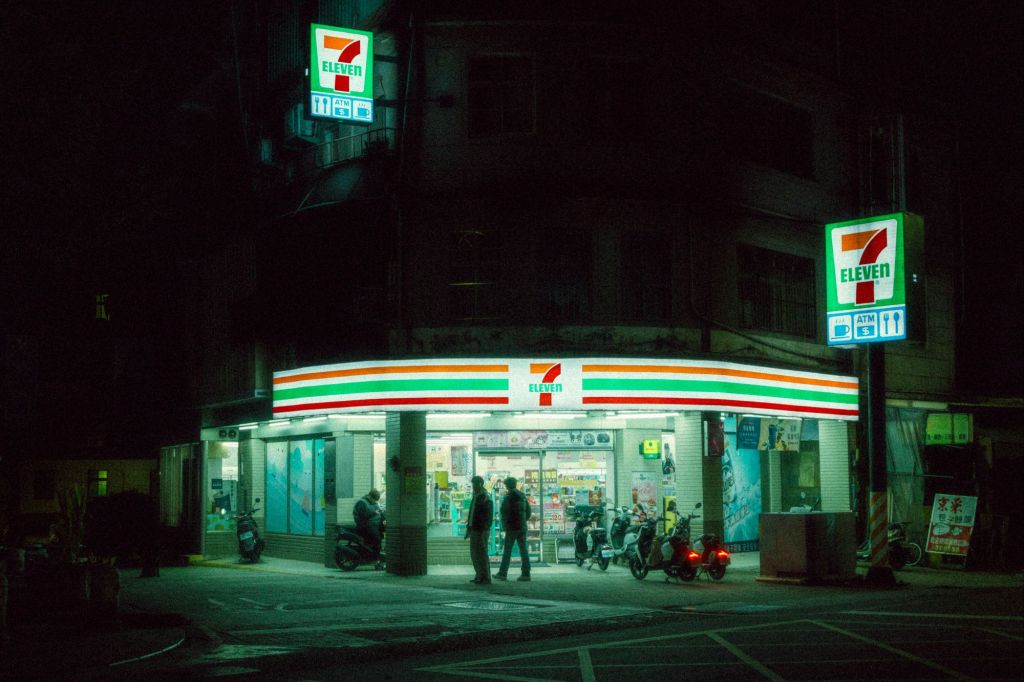
 Tokyo Frame
Leave a comment